Teaching philosophy
I embrace evidence-based scientific teaching tools and approaches that have been shown to facilitate better learning, including
- backwards course design centered around specific learning outcomes spanning multiple cognitive domains
- active learning - I ask students to actively engage with the learning outcomes through group discussions, homework, immersive laboratories, and multi-week projects
- flipped class design - students complete introductory multimedia assignments before coming to the class where they tackle higher level learning outcomes
Courses
University of Louisville (2020 - )
University of Illinois (2019)
For the full teaching CV click here
- BIOL 241 & 243 Experimental Biology - a new introductory biology sequence that I am designing in collaboration with Drs. Natalie Christian, Rachel Pigg, and Jeffrey Masters. We're building this laboratory around a course-based undergraduate research experience (CURE), and are funded by the KY INBRE grant.
- BIOL 102 Biology: Current Issues and Applications - non majors introductory biology
- BIOL 240 Unity of life - introductory cell and molecular biology
- BIOL 242 Honors Diversity of Life - introductory anatomy and physiology
- BIOL 329 Cell and Molecular Biology
University of Illinois (2019)
- IB 270 Honors Evolution of Molecules and Cells - genome and cell biology
- IB 271 Honors Organismal Biology
For the full teaching CV click here
Teaching materials for download
Feel free to use any of my labs or materials available below (please indicate their source). Note: I haven't had time to re-write these materials for general application, they are taken straight from the courses, and thus have a lot of course specifics that will be irrelevant for you.
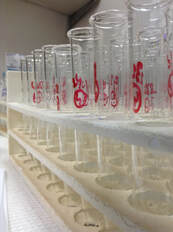
Stress physiology and data analysis lab
This lab is a modification of the Haussmann et al. 2017 lab on the change in salivary cortisol in students in response to stress. The modifications from the Hausmann et all. (2017) include a heavier data analysis component and asking students to choose and collect unique covariates of their interest. The files are taken directly from the course, please excuse typos. Feel free to modify and adapt. Download files here
This lab is a modification of the Haussmann et al. 2017 lab on the change in salivary cortisol in students in response to stress. The modifications from the Hausmann et all. (2017) include a heavier data analysis component and asking students to choose and collect unique covariates of their interest. The files are taken directly from the course, please excuse typos. Feel free to modify and adapt. Download files here